
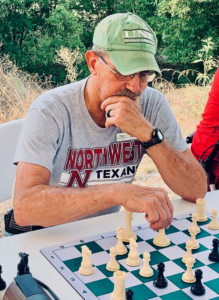
Playing chess is my hobby. I enjoy the problem solving process. Luck isn’t a factor. Accountability of decisions made, as well as recognizing threats and opportunities, is the loose summation of this game. I choose not to improve my game by studying and lessons. Any improvement I get is by experience. Perhaps it’s the satisfaction to troubleshoot and develop solutions myself. Solving a chess problem without knowing book is very satisfying. Through the years I have found what works best for someone who likes to play more than study.
- I mostly play Chess.com online Blitz games (less than 5 minutes for each player). I prefer 3 minute games. Loosing a 3 minute game doesn’t hurt as much as getting beat in a longer game. So for me, fast games are a mental self-protection mechanism.
- I try to have a strong defense and not attack early. I build my defense and let my opponent be the aggressor.
- Be patient. Don’t panic. Many times a hard attack will inadvertently leave the opponents King with little or no protection. I wait and look for these opportunities. Then I say to myself “my turn” and attack.
- It is most satisfying checkmating without much effort on my part. This can be called a self-mate because my opponent did most of the work in providing me the opportunity to mate. All I had to do was recognize the situation and act decisively. My opponent is also looking for weaknesses in my position. I’ve been, too many times, on the receiving end of the self-mate concept. So recognizing potential threats and formulating defensive countermeasures has evolved into the strongest part of my game.
- The biggest sting is obviously bad moves; blundering. Playing great and still getting beat isn’t a bad thing. I respect and appreciate a hard fought game. Of course, I like and want to win, but troubleshooting and playing well is very satisfying. Blundering a move is my biggest dislike.
Patience and opportunity recognition is my game. Interestingly these traits transfer into my regular life as well. I’m not an aggressive person. I’m more comfortable listening and observing. Others are welcome to attack and overextend their position. Disciplined patience, thought, and calm speech works to reduce blunders and conflict escalation. Your move.
(Freewird on Chess.com)
DISCLAIMER
The information provided on this blog is for general information purposes only and does not constitute legal advice, psychological counseling, or mediation services.